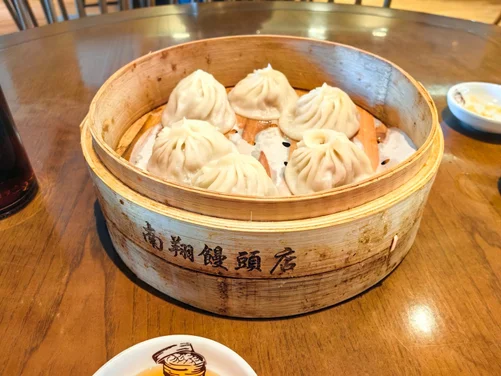
小笼包
Xiaolongbao
Thin-skinned dumplings filled with hot broth. Give them a moment to cool, then try a little vinegar with your first bite.
Read the guideA food lover’s guide to the city
Start with a basket of soup dumplings or a plate of pan-fried pork buns. Here you’ll find tips on choosing a shop, reading the menu, and ordering a good meal in Shanghai.
Chinese dish names, prices, and ordering tips.
A few favorites to start with
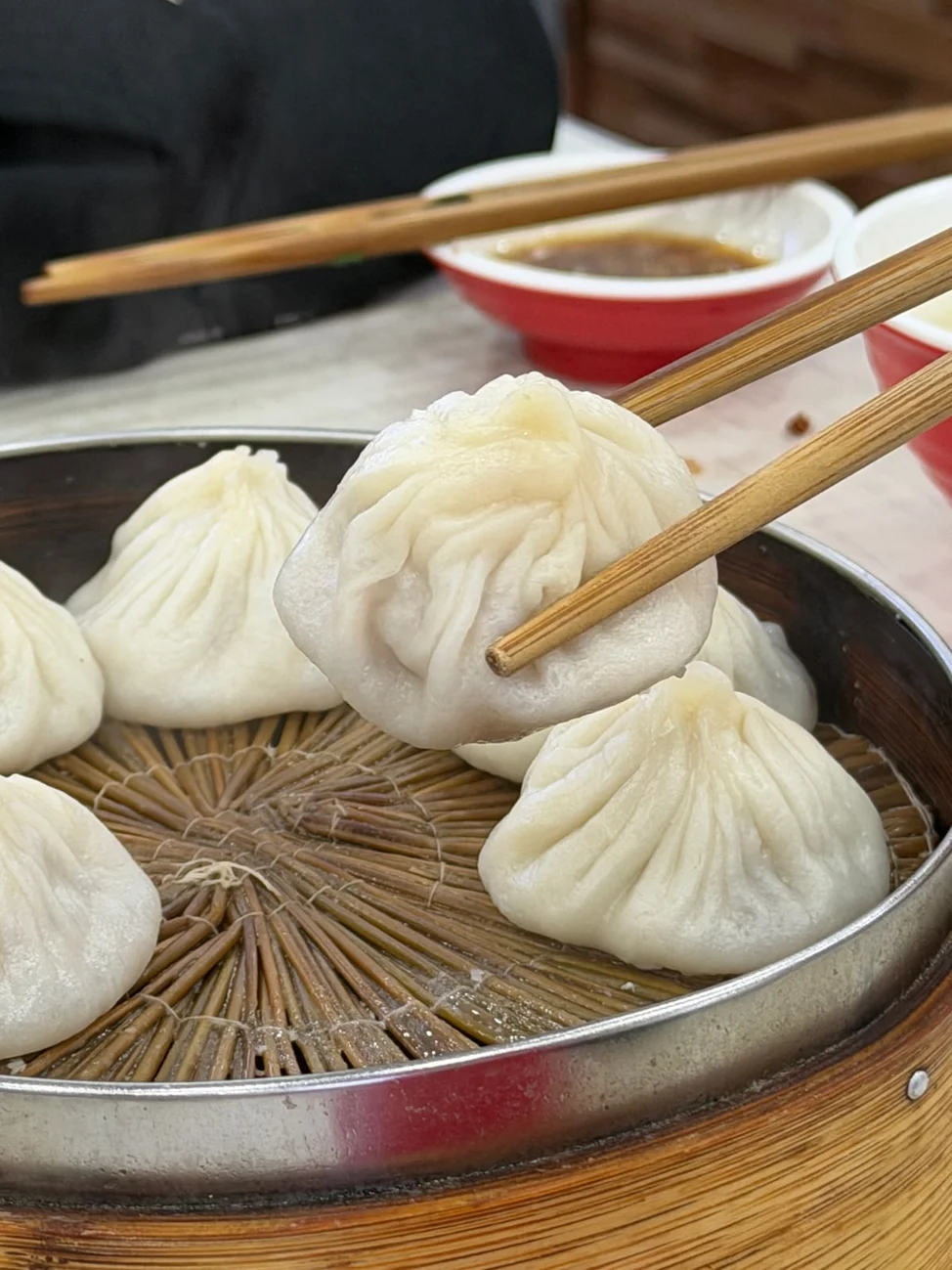
小笼包
Thin-skinned dumplings filled with hot broth. Give them a moment to cool, then try a little vinegar with your first bite.
Read the guide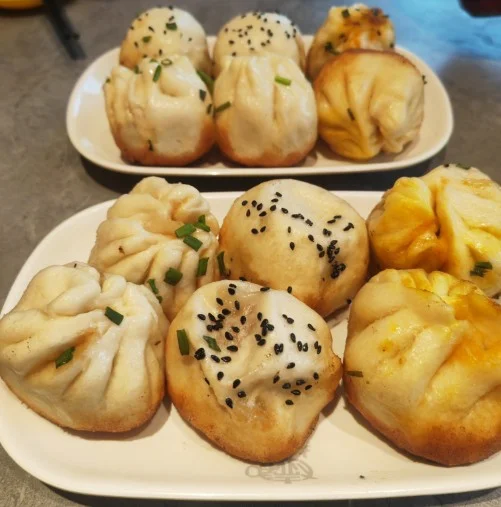
生煎包
Pork buns with crisp, golden bottoms and soft tops. Some are full of soup; others are fluffier and more bread-like. The shop you choose makes a difference.
Read the guide排骨年糕
Fried pork chop with chewy rice cakes in a sweet-savory brown sauce — what a good plate tastes like, how to order, and why Xian De Lai still leads.
Read the guide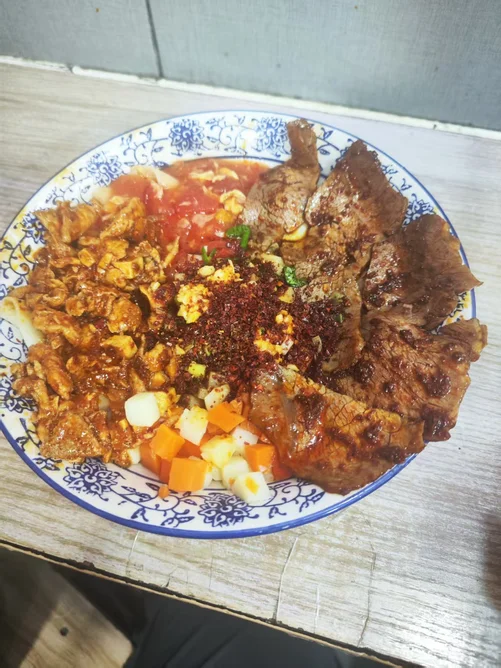
biangbiang面
Xi’an’s belt-wide hand-pulled noodles under chili oil and scallions — what biangbiang noodles are, where to eat them in Shanghai, and how to order.
Read the guide
Breakfast in Shanghai
Take a morning walk through Huangpu for warm soy milk, crisp youtiao, and the rest of Shanghai’s four breakfast classics.
Read the breakfast guideThe complete picture
Shanghai eats from five in the morning. Before the offices fill, the bun counters are already three batches deep, the noodle shops have their broth on the boil, and the pan-fried dumpling windows are snapping and hissing down lanes you would otherwise walk past. This city runs one of the great street-food cultures on earth, and almost none of it is arranged for tourists — which is the good news, because it means the food is real, the prices are local, and the only barrier between you and an excellent ¥10 breakfast is knowing what to point at.
This site exists to close that gap. Every dish guide covers what the food tastes like, what it should cost, the Chinese name to show at the counter, and how to eat it without injury. The shop guides cover the city's biggest chains — where to find each one, what to order, and what a visit costs. And thecomplete guide stitches it all together: when to go, how to pay, how to order without shared language.
A note on how we work, because it matters: the dish pages are written from first-hand visits and carry the dates to prove it; the chain pages are compiled from map data — branch counts, prices, and addresses pulled in October 2026 and labeled as such. Nothing on this site is paid placement, and when a dish isn't worth a special trip, the guide says so. Theabout pagehas the full methodology, and thesupport formtakes corrections — which we read, because in a city this fast, yesterday's shop hours are already history.
Where to eat, by neighborhood
People's Square and Huanghe Road. The old snack lane still carries its 1990s pedigree: Yang's flagship shengjian, Da Wang's guotie counter five doors down, and the museum quarter a walk south. This is the highest density of famous pans in the city — arrive at 8 a.m. to eat it before the crowds do.
The old city and Yu Garden. The streets around the Confucian temple and the Yu Garden tourist zone hold the tangbao chains, the 24-hour wonton shops, and the lane-city fabric that most visitors only see from a tour bus. Nanxiang, the soup dumpling's ancestral brand, anchors the tourist end; the lanes a few blocks west are where the neighborhood actually eats.
The former French Concession. Plane-tree streets and cafe culture, threaded with survivors of the older food city: guotie on Yandang Road, benbang noodle shops off Weihai Road, and breakfast windows in the lanes between the boutiques. The best eating here rewards walking slowly and looking through doorways.
Hongkou and the north. University crowds and old-lane breakfasts, with the cheapest soup dumplings in the city and the 24-hour noodle counters that keep the night shift fed. Less English, more volume, full value.
Putuo and Zhenru. The temple town of Zhenru keeps one of the few surviving old street grids, with guotie counters and wet markets operating much as they have for decades — a genuine morning-out for travelers who have seen the center.
Pudong and the new districts. East of the river, the street-food tradition rides along in the residential fabric around the office towers: budget tangbao windows near the metro stations, 24-hour roujiamo shops in the northern suburbs, and food courts where the chains from this guide cluster within one escalator ride of each other. Nobody crosses the river for a snack — but if your hotel is over there, the ¥10 breakfasts followed you.
Reliable anywhere
Shanghai's snack scene isn't only single-shop legends. A handful of homegrown chains — nearly 2,000 branches between them — sell shengjian, guotie, soup dumplings, wontons, and noodles to standard, at prices that rarely cross ¥30. They are often the best meal within walking distance of wherever you wake up: Babi Mantou for the ¥9 steamed-bun breakfast, Yang's Fry-Dumpling for the famous shengjian, Lao Sheng Chang for workday xiaolongbao, Hu Ji for guotie with duck soup, Wu Mao Xing for the benbang noodle canon, and Mo Mo Jia when the Shaanxi craving hits. The full ranked list — the twenty largest by branch count — is in the chain shop guide, each with addresses, hours, and an ordering phrase to show at the counter.
One city, many provinces
Shanghai's own noodle tradition — benbang — runs on scallion oil, soy, and sweetness: start withscallion oil noodlesand the pickled greens bowlthat anchors the city's mornings. Around the local canon sit the provinces: Lanzhou's clear-broth lamian pulled to order in a dozen new-wave chains, Chongqing's numbing-spicy xiaomian, and Shaanxi's belt noodles — biangbiangand oil-splashed— which Shanghai adopted so thoroughly they now read as local. One week of noodle lunches in this city can cross four provinces without a single long ride.
The practical parts
Payment is mobile-first. Street kitchens live on Alipay and WeChat Pay QR codes; both now accept international cards once set up, and every shop in this guide takes cash as the fallback. Carry small notes — ¥10s and ¥20s — because change for a ¥100 at a dumpling window is a negotiation.
Ordering without Chinese works. Every shop guide on this site carries a one-line ordering phrase — Chinese script to show, plain pinyin to attempt — and the universal fallbacks (pointing, finger counts, showing a photo from these pages) are not just tolerated but expected. Menus are pictures on walls; the glass case is the real menu.
Morning is the main service. Most street kitchens open between 5 and 7 a.m., peak before 9, and wind down by early evening; the exceptions — 24-hour wonton shops and noodle counters — are marked in the shop guides. Plan the famous breakfasts early, the mall chains midday, and keep one late-night bowl in reserve.
What things cost
A sticky-rice ball runs ¥6–10; a plate of shengjian ¥13–22; a bowl of scallion-oil noodles ¥10–18; a steamer of everyday soup dumplings ¥18–30 at the chains and more at the famous houses; a full four-item breakfast set about ¥12–20; a mall bowl of lamian ¥28–40. Two honest meals a day from the windows in this guide cost less than a single hotel breakfast — the site's price guides explain where each figure comes from and how to spot the exceptions.
Where to begin
The dish-first plan: start withsoup dumplingsor pan-fried buns, then work through the dish guides — each one is a complete briefing: taste, price, Chinese name, where to eat it. The morning plan: take thebreakfast walkthrough Huangpu and eat thefour breakfast classicsin their natural habitat. The deep plan: read thecomplete guide cover to cover, then eat your way down thechain shop list — twenty guides, one per chain, ¥10 at a time.
However you start: go early, carry small notes, and order the thing the pan is already making. The rest of this site handles the details.