Shanghai Street Food
上海街头小吃指南
Give yourself a morning to eat in Shanghai. Start with pan-fried pork buns or a basket of soup dumplings, then make room for soy milk and something crisp from the fryer. This guide covers the food, the neighborhoods to try, and the small practical things that help at the counter: what a portion means, how to pay, and which Chinese name to show when you order.
- Updated
- September 2026
- Read time
- 16 min
- Budget per meal
- ¥15–40
Finding street food in Shanghai
Shanghai street food isn’t always sold from a cart. Much of it comes from small storefronts, market stalls, and takeout windows. Look for the pans and steamers as well as the shop signs; a place with only a few stools can serve a very good breakfast.
Many vendors moved indoors as the city changed, but the food stayed. You’ll still find freshly fried dough, buns coming out of steamers, and noodles cooked to order, often in shops barely wider than a doorway.
If you’re expecting rows of outdoor food carts, these shops are easy to overlook. Have a look at what’s cooking before deciding that a street has nothing to eat.
Around busy visitor areas such as Nanjing Road, compare menus and prices before ordering. A short walk onto the surrounding streets can give you more options than the main pedestrian strip.
When to go
Breakfast is a good reason to start early. Many bun and dumpling shops are open before 7 a.m., while others, especially mall branches, start later. Check the hours of the shop you want rather than assuming the whole city keeps the same schedule.
| Hours | What's on | Verdict |
|---|---|---|
| 6–9 a.m. | Breakfast classics, fresh pan-fried buns, and soup dumplings | Best for breakfast |
| 9–11 a.m. | Breakfast winding down; bakeries and some noodle shops | Quieter |
| 11 a.m.–1:30 p.m. | Noodle shops, xiaolongbao, second batch of shengjian, wontons | Good, but crowded |
| 2–5 p.m. | Some breakfast shops close; other kitchens stay open | Check ahead |
| 5–9 p.m. | Grilled food, fried chicken cutlets, malatang, and evening stalls | Evening food |
| 9 p.m.–late | Seasonal crayfish, late-night pan-fried buns, and congee | Fewer options |
For a breakfast walk, aim for 7–8:30 a.m. You’ll have a better chance of catching fresh batches before the smaller stalls sell out. If you sleep in, look for a noodle shop or a dumpling shop that serves lunch.
What to eat
If it’s your first visit, start with the buns, soup dumplings, and breakfast staples below. After that, there are plenty of smaller snacks to try when you spot them.
Start with these
Shengjian bao 生煎包 have crisp bottoms, soft tops, and pork filling. Some hold plenty of hot broth; others have thicker, fluffier dough. The guide compares Xiaoyang, Dahuchun, and Dongtaixiang so you can choose the style you want. At Dongtaixiang, four buns are around ¥13.
Xiaolongbao 小笼包 are thin-skinned soup dumplings, usually ordered by the basket. Start with pork or compare it with a crab filling. The six-shop guide has branch addresses and a menu photo to help you choose, with a reminder to let the broth cool before you bite.
The four breakfast classics 四大金刚 are youtiao (油条, fried dough sticks), dabing (大饼, sesame flatbread), soy milk, and cifantuan (粢饭团, sticky rice balls). Try dipping youtiao in warm soy milk, or wrapping it in a flatbread. Thebreakfast guide covers the four and suggests a morning walk through Huangpu.
Sticky rice balls 粢饭团 wrap warm glutinous rice around fried dough, often with pickled vegetables and pork floss. At around ¥6, one makes a handy breakfast to carry as you walk.
Scallion oil noodles 葱油拌面 get their flavor from scallions fried slowly in oil, then tossed with noodles, soy sauce, and a little sugar. A bowl is usually around ¥10–18. It may look meat-free, but check for dried shrimp if you’re vegetarian or allergic to shellfish.
More Shanghai favorites
Keep an eye out for these too, especially around neighborhood markets and older breakfast shops:
- Radish fritters 油墩子 have a crisp shell and a soft shredded-radish filling. Look for them at carts near markets on winter afternoons.
- Fried rice cakes 粢饭糕 are blocks of rice fried until crisp outside and chewy inside. They’re different from cifantuan, the sticky rice ball above, despite the similar names.
- Braised wheat gluten 四喜烤麸 is a cold dish of spongy gluten, mushrooms, wood ear, and peanuts in a sweet-savory sauce.
If you’re curious
Stinky tofu 臭豆腐 has a strong fermented smell and is often served with a savory sauce. Duck blood and vermicelli soup 鸭血粉丝汤 is a Nanjing dish also found in Shanghai, with soft cubes of duck blood in broth.
A few things to watch for
- Prices around Yu Garden. It can be a convenient place to eat while sightseeing, but compare the menu with other shops before ordering. A higher bill doesn’t necessarily mean a better basket of dumplings.
- Snacks on pedestrian streets. Check the price and portion size first, especially at a stall without a clearly displayed menu.
- Curried beef soup. Some shops make it in-house; others use a mix. The shengjian guidehas more on what to order with your buns.
- Different branches of the same chain. Hours, prices, and menus can vary. Look up the branch you’re actually visiting, not just the brand name.
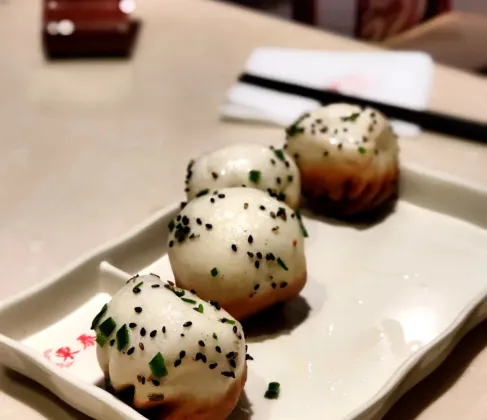
Shengjian Bao (Shengjian Mantou): Shanghai’s Pan-Fried Pork Buns
生煎包
Shengjian bao, also called shengjian mantou, has crisp bottoms, soft dough, and juicy pork inside. Three Shanghai chains compared, plus how to order.
People's Square · South Huangpi Road Station
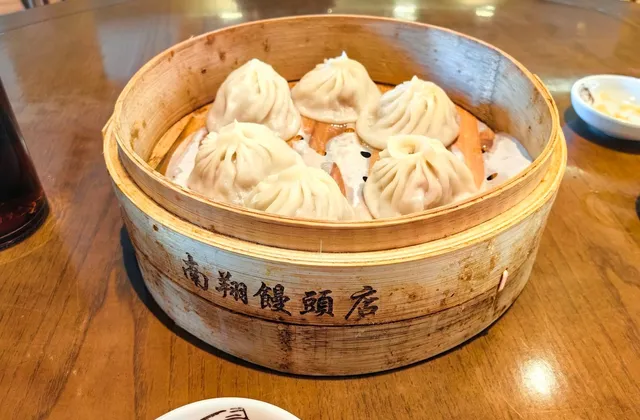
Xiaolongbao: Where to Eat Soup Dumplings in Shanghai
小笼包
Six well-known places for soup dumplings in Shanghai, picked from hundreds of shops, with branch addresses, menu prices, and tips for your first basket.
People’s Square, Jing’an & beyond
Where to eat
It’s easier to plan around a neighborhood than to cross the city for every dish. Pick an area near your hotel or your first stop of the day, then check which shops are open.
Around People’s Square. Jia Jia on Huanghe Road and Lailai on Tianjin Road are useful places to start for xiaolongbao. You can also work a shengjian stop into the morning; check the branch addresses in the dish guides before setting off.
The old town around Yu Garden. Eating here fits easily into a sightseeing day. Compare the busy snack streets with the smaller shops on nearby roads, and check prices before ordering.
Wet markets. Look around the edges of neighborhood markets for breakfast stalls and small shops. An early visit can combine breakfast with a look at the morning produce shopping.
Hongkou. Shanyin Road is home to Wanshou Zhai, whose listing gives a 4:30 a.m. opening time. It’s an option for an early breakfast if you’re staying on this side of town; check the current hours before making the trip.
The former French Concession. A good area for combining a walk with a meal. Fuchun’s Jianguo West Road branch is near Hengshan Road, with soup dumplings to fit around a morning looking at the neighborhood’s buildings and streets.
Yangpu. If you’re staying in the northeast, look around the neighborhood streets near Yanji East Road rather than traveling downtown for every meal. Check the route from Metro Line 8 for the particular shop you choose.
More neighborhood guides are planned. For now, use the individual dish pages for shop addresses and directions.
How to order
A translation app helps with the menu, but it won’t always explain which line to join or whether to pay before you sit down. These are the things to check when you arrive:
- Order and pay first. Many shops have a cashier and a separate pickup counter. If you get a paper ticket, hand it to the person serving the food.
- Check which line you need. Some shops have separate lines for eating in and takeout. Look at the signs or ask before joining one.
- Check the portion size. Show the dish name and ask how many pieces come in one portion. A basket of dumplings isn’t the same size at every shop.
- Keep small bills handy. ¥100–200 in ¥10 and ¥20 notes gives you a backup if mobile payment isn’t working.
- Expect a short menu. Many dishes are prepared in batches, so substitutions may not be possible. If you have an allergy, ask about ingredients rather than assuming a topping can be left off.
- Check where to leave your dishes. Some shops have a return area or bins for takeout containers. Follow the signs or ask the staff if you’re unsure.
Useful phrases at the counter
Save this table on your phone. The pinyin is a rough pronunciation guide; showing the Chinese text is often the easiest option.
| Chinese | Pinyin | English |
|---|---|---|
| 四个 | si ge | Four pieces, please |
| 一份 | yi fen | One portion |
| 堂吃 | tang chi | For here |
| 打包 | da bao | To go |
| 不要辣 | bu yao la | Not spicy, please |
| 不要香菜 | bu yao xiang cai | No cilantro |
| 多少钱 | duo shao qian | How much? |
| 能刷卡吗 | neng shua ka ma | Do you take cards? |
One shop, start to finish
At a typical counter-service shop, you’ll order and pay, collect a ticket if the shop uses one, and then pick up your food. To ask for one basket, try 一笼 (yi long) while pointing to the dumplings you want. Once you have your food, look for the vinegar and find a seat if there is one.
Food safety
Use the same care you would with street food anywhere. Look for food cooked to order and served hot, clean utensils, and careful handling. A busy shop can be a useful sign of fresh batches, but a line alone doesn’t tell you whether the food is safe.
A few things to look for at the counter:
Good signs
- — Cooked to order in front of you: fried, steamed, boiled
- — Fresh batches and food served promptly
- — Clean utensils and food kept covered
- — Raw and cooked foods kept separate
Think twice
- — Cold dishes sitting out in summer
- — Pre-cut fruit and roadside juice
- — Food left lukewarm on a tray
- — Food handled with dirty hands or utensils
Choose bottled or properly boiled drinking water. Soup and soy milk are cooked, but they still need to be handled and stored safely. If something looks poorly stored or undercooked, choose another dish or another shop.
Dietary needs
Vegetarian. A dish without visible meat may still contain lard, pork stock, or dried shrimp. Scallion oil noodles, youtiao, soy milk, and braised wheat gluten are options to ask about, not guarantees. See the noodle guide for the shrimp warning, and check ingredients with the staff.
Halal. Look for 清真 signs at Lanzhou noodle shops and other halal restaurants. Ask about the shop’s preparation and certification if you need to be sure it meets your requirements.
Allergies. Wheat, soy, sesame, peanuts, and shellfish appear in many of these foods, sometimes in sauces or seasonings. Show the relevant Chinese text below, and ask about shared equipment as well as ingredients. If the staff can’t confirm, don’t assume the dish is safe for you.
我对花生过敏,非常严重。这个菜里有花生或花生油吗?
I have a severe peanut allergy. Does this contain peanuts or peanut oil?
我对贝类/虾过敏。这个菜里有虾或海鲜吗?
I’m allergic to shellfish and shrimp. Does this contain shrimp or other seafood?
我对芝麻过敏。这个菜里有芝麻或芝麻油吗?
I’m allergic to sesame. Does this contain sesame or sesame oil?
我不能吃麸质/小麦。这个是面做的吗?
I can’t eat gluten or wheat. Is this made with wheat flour?
Spice. Many traditional Shanghai dishes are mild, with more emphasis on soy sauce and sweetness than chili heat. The city also has plenty of spicy food from other regions, so ask about the dish rather than judging it by the neighborhood.
A morning food walk
These four stops make a possible breakfast walk around central Shanghai. You don’t need to eat at every one: choose two, or share portions if you want to compare the different styles of dumpling. Check the branch hours before setting off.
Dahuchun 大壶春, Yunnan South Road
Start with four of the thicker, breadier shengjian, around ¥10. Try to catch a fresh pan.
Dongtaixiang 东泰祥, Chongqing North Road
Compare Dongtaixiang’s fluffy dough and soup-filled buns with Dahuchun’s style. A portion of four is around ¥13.
Jia Jia Tang Bao 佳家汤包, Huanghe Road
Switch to steamed soup dumplings. Start with pork and see what other fillings are on the menu. Listed average spend on Amap: ¥46 per person.
Lailai Xiaolong 莱莱小笼, Tianjin Road
Try a crab-and-pork basket if you still have room. Check the menu for pure crab prices and portion sizes. Listed average spend on Amap: ¥64 per person.
Leave time to walk between stops and wait for fresh batches. Your total spend will depend on how many portions you share and whether you order pork or crab dumplings. Finish near People’s Square if you want an easy connection to the rest of the city.
What’s in season
Some foods are worth looking for at a particular time of year. Alongside the year-round buns and noodles, keep an eye out for these:
| Season | The thing to eat |
|---|---|
| Spring | Qingtuan 青团: green glutinous rice cakes, often filled with red bean paste, sold around Qingming. |
| Summer | Spicy crayfish 小龙虾: an evening meal to linger over, with a pile of shells and plenty of napkins. |
| Fall | Hairy crab 大闸蟹 from late September, along with crab-filled xiaolongbao. Look for 蟹粉 on the menu and check which fillings the shop offers. |
| Winter | Roasted sweet potatoes 烘山芋 and sugar-roasted chestnuts 糖炒栗子: something warm to carry on a cold afternoon. |
FAQ
How do I pay at street-food stalls?
Many small shops use Alipay or WeChat Pay rather than a card terminal. If you plan to use either app, set it up and check that your card works before you arrive. Keep some cash in small bills as a backup; ¥100–200 in ¥10 and ¥20 notes is a useful amount to carry.
What time should I go for breakfast?
Aim for around 7–8:30 a.m. Many stalls start early and some sell out by 9, but hours vary. Check the shop you want to visit, especially if you’re making a special trip.
Do I need to speak Chinese?
Not necessarily. You can often point to the food or show the Chinese dish name on your phone. The dish guides include Chinese names, and shop addresses where available, to make that easier.
Is there still street food in Shanghai?
Yes. Much of it is sold from small storefronts, market stalls, and takeout windows rather than outdoor carts. Look for pans of buns, steamers, and short breakfast menus as you walk.
How much should I budget per meal?
Around ¥15–40 per person is a useful starting point for a simple meal, and breakfast can be under ¥20. Crab dumplings and meals at more expensive shops can cost more. Check whether a price is per piece, per portion, or an estimated spend per person.
What should I look for when choosing a stall?
Choose food cooked to order and served hot, and look for clean utensils and careful handling. A busy line may mean fresh batches, but it isn’t a safety guarantee. Avoid food that looks poorly stored or undercooked, and use bottled or properly boiled drinking water.
Are there vegetarian options?
Yes, but ask about the ingredients. Soy milk, youtiao, noodles, and vegetable dishes may be options, while lard, pork stock, or dried shrimp can appear in food that looks meat-free. Check sauces and shared preparation equipment too.
Everything in this guide
Dishes
- Biangbiang Noodles: The Belt Noodle You Can’t Type
- Oil-Splashed Noodles: Shaanxi Chili Oil over Hand-Pulled Noodles
- Pickled Mustard Greens and Pork Noodles: A Shanghai Comfort Bowl
- Pork Chop Rice Cakes: Xian De Lai’s Old Shanghai Classic
- Scallion Oil Noodles: A Shanghai Lunch for Around ¥12
- Shengjian Bao (Shengjian Mantou): Shanghai’s Pan-Fried Pork Buns
- All 9 dishes →
Neighborhoods
Neighborhood guides are coming later.
Shops
For now, you’ll find shop recommendations in the dish guides.