Sticky Rice Ball: How to Order
粢饭团 · cī fàn tuán
Before you order
- Payment
- Varies by stall
- English menu
- Varies by stall
- Ordering
- Point to order
- Typical price
- ¥6–10 per portion
ORDER The savory ball, wrapped while you wait, A sweet ball if pork floss isn't for you
SKIP Balls wrapped hours earlier — the rice toughens and the dough goes soft
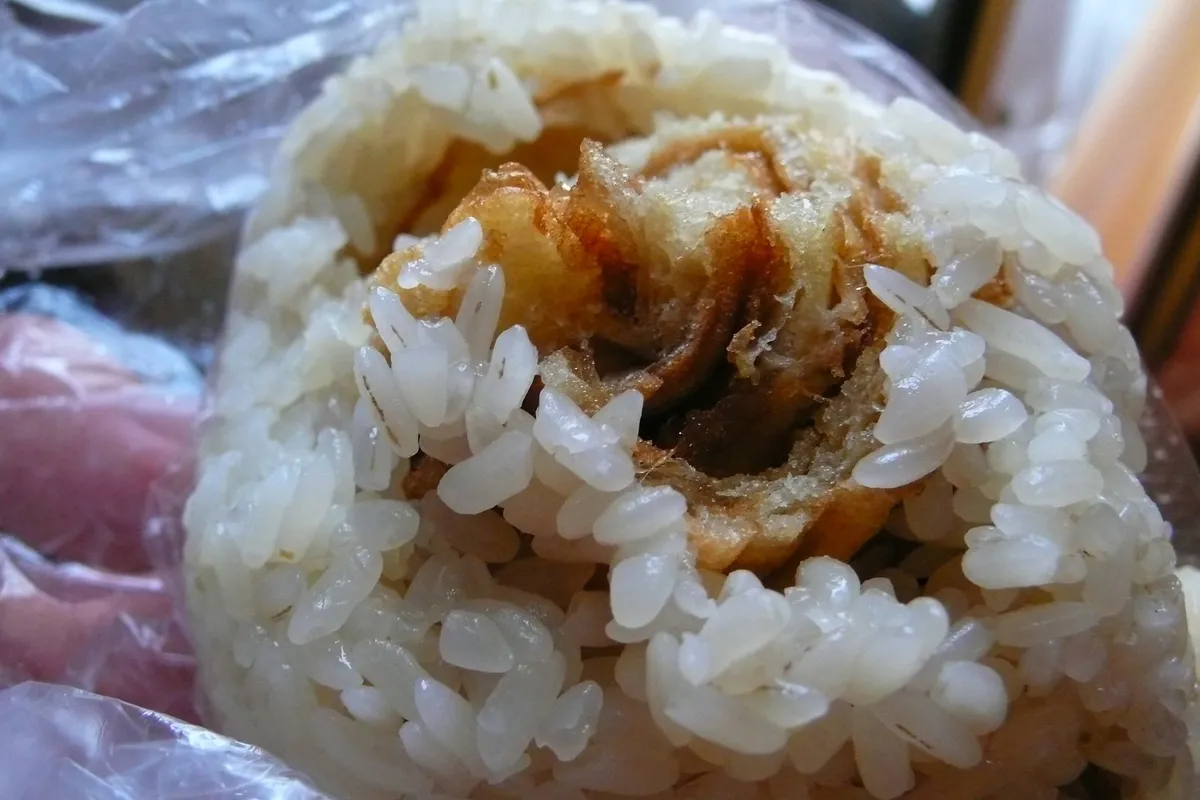
A sticky rice ball (粢饭团 cī fàn tuán) is a fist of warm sticky rice pressed around a strip of crisp fried dough, wrapped tight, and handed over ready to walk with. It’s one of Shanghai’s portable breakfast classics: no bowl, no chopsticks. Rice plus fried dough makes a filling start to the morning, so split one if you’re trying other breakfast dishes too. Expect to pay around ¥6–10 for a basic ball; prices vary by stall and extras.
The name points to its shape: 团 refers to a rounded portion, and the vendor presses the rice around the filling into a plump oval. It differs from a typical Japanese onigiri in its glutinous rice and youtiao filling.
Savory or sweet
The first thing to sort out is which version you want. Say one word and show the characters:
- 咸的 (xian de) — savory. Rice around a length of youtiao, pork floss, and pickled mustard tuber. Salty, chewy, a little crunchy; the exact filling mix varies by stall.
- 甜的 (tian de) — sweet. Rice around youtiao and sugar — plain white sugar or a darker black-sesame sugar. A simpler option if you prefer a sweet breakfast.
Choosing a freshly made rice ball
Look for warm rice and freshly prepared fillings. As a wrapped rice ball sits, the rice can firm up and the youtiao loses its crunch.
If the rice balls are already wrapped, ask when they were made. You can also point at the rice and fillings and ask for one assembled after you order.
Two different foods: 粢饭团 and 粢饭糕
The names look similar, but the rice is prepared in different ways:
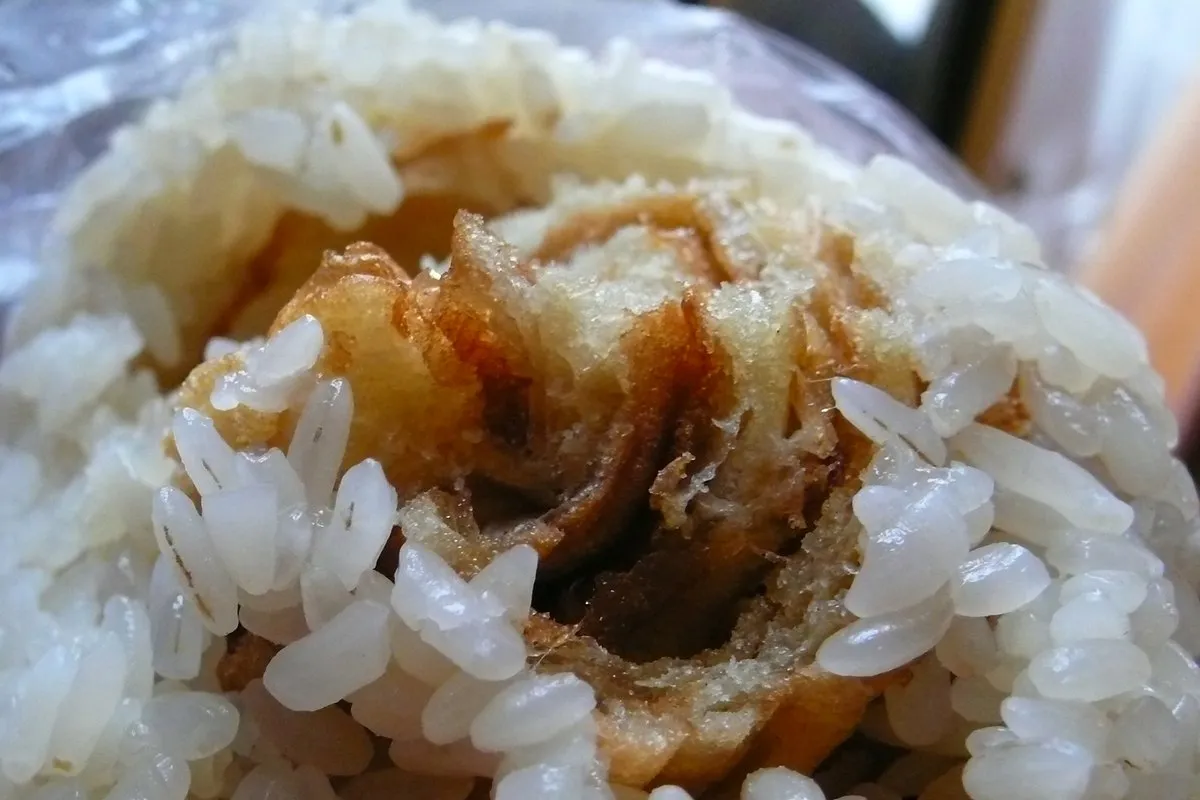
| 粢饭团 cī fàn tuán — this page | 粢饭糕 cī fàn gāo — a different food |
|---|---|
 |
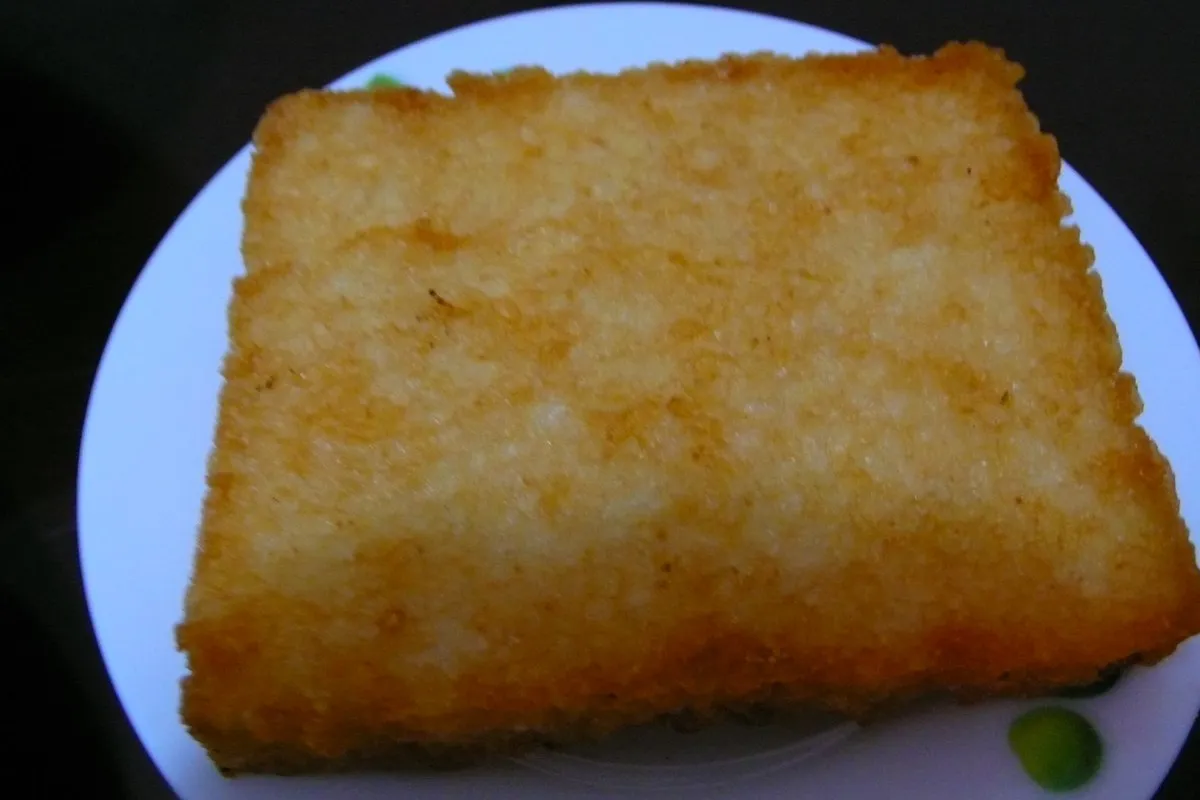 |
| Warm rice pressed around youtiao, with sweet or savory fillings. Eaten from its wrapper. | Rice pressed into blocks and fried, with a crisp outside and a softer center. The traditional version is usually savory. |
When you’re scanning a stall, watch the last character: 团 is the soft ball with fillings. 糕 is the fried rice cake. Seasoning, additions, and how crisp it is can vary by vendor, so check the food as well as the name.
How to order a sticky rice ball
Show the Chinese characters or use these phrases to choose your filling:
- 咸的 (xian de) — “the savory one”
- 甜的 (tian de) — “the sweet one”
- 加一个蛋 (jia yi ge dan) — “add an egg”; some stalls will tuck a fried egg inside
- 不要肉松 (bu yao rou song) — “no pork floss,” if you’d rather skip it
What’s actually in it
The base is glutinous rice, steamed soft in a wooden bucket — white rice, or purple rice (紫米 zǐ mǐ) at some stalls — pressed around a fresh youtiao. Rice and youtiao alone are the whole classic version; everything else is an addition.
The savory version adds pork floss (肉松 ròu sōng) and pickled mustard tuber; the sweet one adds sugar. Some stalls also tuck a pinch of sugar into the savory one — it rounds out the salt and adds a bit of texture rather than making the ball sweet.
Other fillings turn up as paid extras: ham sausage, a salted egg yolk, an extra helping of pork floss. If you want one, say 加 (jia) — “add” — plus the name, as in 加咸蛋黄 (jia xian dan huang), “add a salted egg yolk.” Stack a few and expect the total to creep past the base price.
A few things worth knowing before you order:
- Savory rice balls commonly contain pork floss, and other fillings can contain meat too. Ask about the whole filling mix if you avoid meat.
- The youtiao inside is wheat, so the ball isn’t gluten-free even though the rice is.
- The sweet version often uses black-sesame sugar; worth knowing if sesame is a problem for you.
- Everything is handled at the same small counter, so don’t count on zero cross-contact with other fillings.
When and where to find one
Look at neighborhood breakfast shops, stalls near residential lanes, and wet-market breakfast counters. A steaming rice bucket and bowls of fillings are useful clues. Ask whether a rice ball can be assembled for you, and check the posted price before adding extras.
Morning is a good time to look. Opening hours and sell-out times vary by stall, so check with a particular shop before making a special trip.
The ball is the fourth of the Four Kings — the classic Shanghai breakfast set of flatbread, youtiao, soy milk, and this. If you’re building a whole morning around it, start with how to order the set.
Sources and photos
Background reading: Cifantuan, covering the rice-and-youtiao base and common sweet and savory fillings. The prices in this guide are estimates; check the vendor’s menu.
Photos: sticky rice ball and fried rice cake by Galaxyharrylion / Wikimedia Commons, CC BY-SA 3.0. Resized and cropped; the adapted images use the same license.

