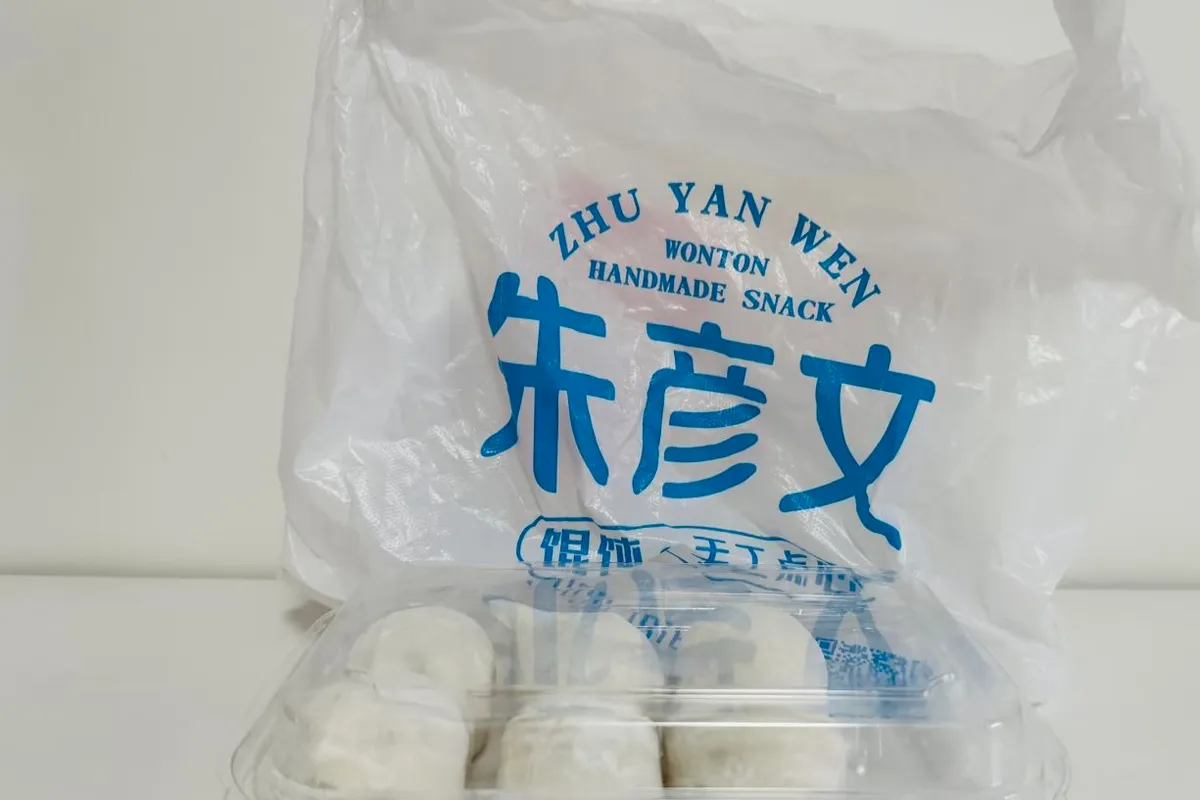
Zhu Yanwen Wontons
朱彦文·馄饨·手工点心 · Zhū Yànwén Húntun
Chain at a glance
- Category
- Buns & Dumplings
- Branches in Shanghai
- ~34
- Typical spend
- ¥18–26 per person
- Payment
- Cash / Alipay / WeChat
- English menu
- Point to order
Show this to order
一碗荠菜馄饨,中碗
yi wan ji cai hun tun, zhong wan · One shepherd's-purse wonton soup, medium size
Zhu Yanwen is the quiet-sibling wonton chain: 34 branches, no famous origin story, and shops that look more like tidy cafeterias than snack counters. What it sells is reliability with a handmade accent — wontons pleated by hand in the window, a long menu of fillings, clean tables, and hours that run a civilized 7 a.m. to 8 p.m. without drama. In a category full of fluorescent-lit hurry, it is the wonton shop you sit down in.
The name reads like a person — Zhu Yanwen, wontons, handmade dim sum — and the branding leans on that personal, shopkeeperly feel: the hand-pleating happens in the front window where you can watch, which is both the marketing and, on most mornings, simply true.
The wontons
These are Shanghai-style large wontons (大馄饨) — plump folded parcels close to dumpling size, with thick wrappers that hold up in hot soup, nothing like the small slippery wontons that float in breakfast broths. A bowl is a dozen-odd of them in a clear, light broth with seaweed and scallion; it is a full meal, and the correct order for anyone whose association with “wontons” is the teaspoon-sized version.
The two fillings to know:
- Pure pork (鲜肉). The benchmark — seasoned pork, juicy, the wrapper’s chew doing half the work.
- Shepherd’s purse and pork (荠菜). The Shanghai favorite: a wild, grassy green that cuts the richness of the pork. Locals order it by default in spring, when the fresh green appears everywhere in Shanghainese cooking, but the frozen year-round version is entirely respectable.
Beyond those, the board runs a dozen-plus fillings — shrimp, mushroom, vegetable mixes — and the honest strategy is to work through the list over visits, one bowl at a time, rather than gambling on exotic combinations first. Portions come in 小/中/大 (small/medium/large); medium is the meal, and the order phrase above specifies it.
The dim-sum half of the name
手工点心 — “handmade dim sum” — covers the supporting cast, and it is worth a look before you order, because it rotates by branch and day: small steamed buns, spring rolls, fried cutlets, the occasional seasonal item. What’s on the counter is what the kitchen is currently good at, and a wonton bowl plus one counter snack is the complete lunch. Prices sit a touch above the older wonton shops — ¥18–26 for the full experience — and the room, the tables, and the pace account for the difference honestly.
How a visit works
Order at the counter from the board; fillings are listed with Chinese names and, at some branches, photos. Pay by QR code, take a seat, and the bowl arrives in a few minutes. The tables hold the standard finishing set — white pepper, black vinegar, chili — and the local move on the soup is white pepper, more than seems reasonable. Shops are calmest before noon and at mid-afternoon; the lunch hour brings the office crowd and a short wait.
The Damuqiao Road branch sits at a crossroads of small restaurants in Xuhui — a neighborhood where you can walk three blocks in any direction and improvise a food crawl — and the Xilingjiazhai branch sits in an old Huangpu lane neighborhood, among breakfast shops of the kind this guide spends most of its time on.
Versus the other wonton chain
The comparison is with Ji Xiang Wontons, the older, larger chain in this guide. Ji Xiang is the machine: standardized, longer hours (24 at some branches), a longer menu, lower prices. Zhu Yanwen is the craft tier: hand-pleated wrappers, cleaner rooms, shorter menu, slightly higher bill. For a 1 a.m. bowl, Ji Xiang; for a proper sit-down lunch, Zhu Yanwen. Eating both once is the cheapest way to understand what “handmade” buys you in this category.
A Damuqiao afternoon
The branch’s crossroads is one of those Xuhui intersections where four streets of small restaurants compete for a single block, and the correct visit treats the wontons as the anchor, not the errand. Lunch at the counter — a medium shepherd’s-purse bowl and whatever the dim-sum shelf is offering — then a slow loop: the lane west toward Xietu Road’s noodle shops, the blocks south where the old fabric mixes with the new cafes, and back through the market street that supplies the neighborhood’s kitchens. It is a two-hour walk through the everyday Shanghai that the tourist circuits skip, and it begins with the most sit-down-friendly wonton bowl in this guide. If the afternoon runs long, the metro at Damuqiao Road connects directly back to the riverside.
A filling strategy for the long board
The menu rewards a system. The anchors first: pure pork and shepherd’s-purse, one bowl each for a table of two. Then the exploratory pick — shrimp for the spend, mushroom for the vegetarians at heart, whatever the board flags as the house list. The fillings to approach with managed expectations are the combination “deluxe” mixes, which read generously on the board and taste like noise in the wrapper; the kitchen’s strengths are single-idea fillings, pleated with attention. Sizes again: medium is the meal, and two mediums shared across three fillings beat one large in every respect — more variety, better temperature control, and a reason to compare notes. Finish with white pepper in the remaining broth; it is the chain’s signature move, borrowed from every wonton grandmother in the city.
Menu notes and what to skip
Skip the fried snacks that have sat past noon at the counter and the instant-soup side dishes on some boards; the steamed and freshly fried items are the kitchen’s honest work. Within the dim-sum shelf, the spring rolls and small buns turn over fastest at the lunch hour — timing, not selection, is the variable. And a note for the soup-cautious: the broth here is the lightest of any wonton shop in this guide, seasoned mostly by the wontons themselves, which is why the pepper shaker exists. Season your own; the kitchen trusts you.
Good to know
- Medium (中碗) is the meal. Large is for the very hungry; small is a calibration tool.
- Look at the dim-sum counter before ordering — the daily items are often better than the printed menu suggests.
- White pepper on the soup is the local finish; the broth is light by design.
- 荠菜 (jìcài) is the filling to learn — pointing at it works at the counter.
- Hours are civilized (7 a.m.–8 p.m., no night shift), so plan the late bowls elsewhere.
A closing practical note: this is the wonton shop to choose when the day needs a chair, a table, and thirty unhurried minutes — the hours (7 a.m. to 8 p.m.) cover every meal but the very late, the rooms are the cleanest in this chain’s tier, and the hand-pleating window gives waiting children something to count. Payment is QR or cash, and the branches above all sit within a short walk of metro stations, which is by design: the chain grew along the commuter corridors where a fast, calm bowl fits the schedule.
And a final note on the chain’s name: unlike most snack brands, it carries a person’s name — Zhu Yanwen — in the old shopkeeper pattern, and the handmade-in-the-window practice is the brand making that name accountable daily. It is a small thing, but in a category full of invented-sounding brand names, a name you can imagine being called across the kitchen is worth a line of credit.
What to order
Large pork wontons 鲜肉大馄饨
Fat Shanghainese wontons, pleated by hand in the shop.
Shepherd's-purse wontons 荠菜馄饨
The green, grassy filling Shanghai orders most in spring.
Handmade dim-sum snacks 手工点心
A rotating side list — steamed and fried small bites by the counter.
Central branches to try
A few well-placed branches picked from the map data — the chain has many more across the city.
朱彦文·馄饨·手工点心(大木桥店)
大木桥路438号1-1夹
Xuhui · Daily 07:00–20:00 · Damuqiao Rd Stn, exit 4
Common questions
What should I order at Zhu Yanwen?
Large pork wontons (鲜肉大馄饨) — fat Shanghainese wontons pleated by hand in the shop — or the shepherd's-purse filling (荠菜馄饨) Shanghai orders most in spring, with handmade dim-sum snacks from the rotating side list.
How much is a wonton lunch at Zhu Yanwen?
¥18–26 per person. Bowls come in sizes — the order phrase asks for a medium — and the steamed and fried snacks by the counter pad the bill.
When is Zhu Yanwen open?
All three branches listed keep the same daily 07:00–20:00 — Damuqiao Road in Xuhui, Xilingjiazhai in Huangpu and Xinshi North Road in Hongkou.
How do I get to Zhu Yanwen by metro?
The Xuhui branch at 438 Damuqiao Road is the metro-friendly one, by Damuqiao Road station exit 4. The Huangpu and Hongkou branches carry no metro note in the data.
What phrase works at the counter?
一碗荠菜馄饨,中碗 (yi wan ji cai hun tun, zhong wan) — one shepherd's-purse wonton soup, medium size. There is no English menu, so fillings and sizes go through the phrase and pointing.