Ajisen Ramen
味千拉面 · Wèiqiān Lāmiàn
Chain at a glance
- Category
- Noodles
- Branches in Shanghai
- ~101
- Typical spend
- ¥35–55 per person
- Payment
- Cash / Alipay / WeChat
- English menu
- Usually available
Show this to order
一碗味千拉面
yi wan wei qian la mi an · One signature tonkotsu ramen
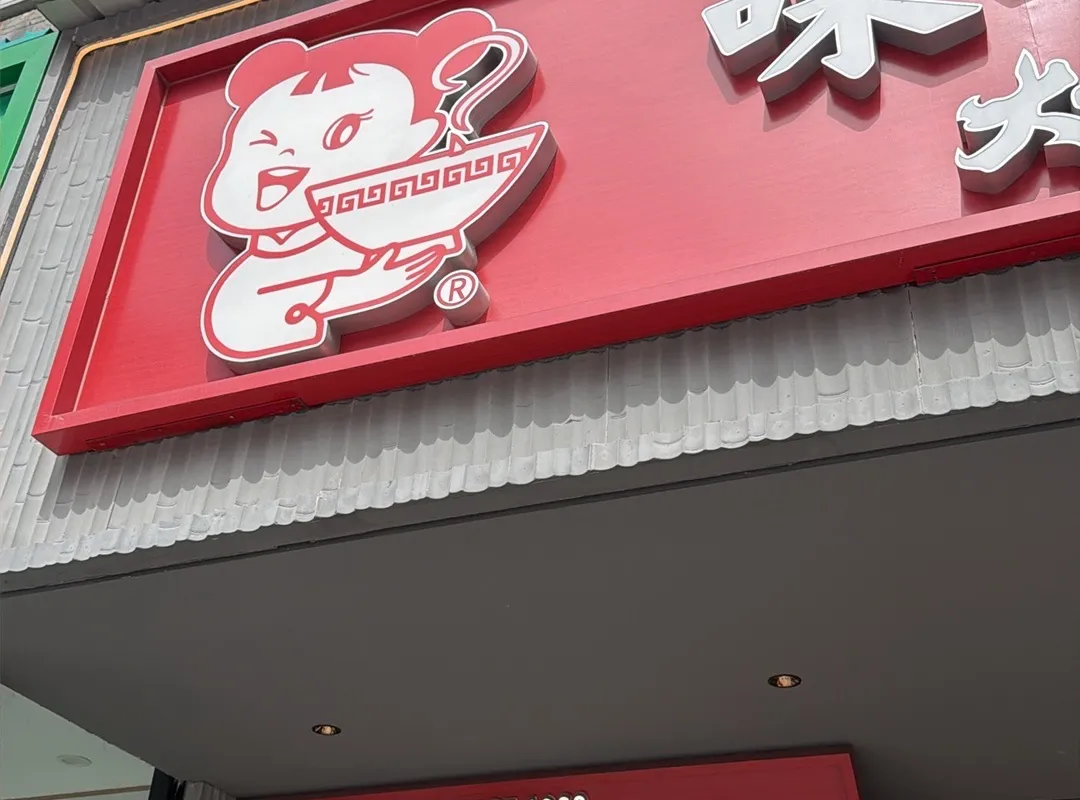
Ajisen is the chain you fall back on, and there is no shame in it. Run from Hong Kong and on the mainland since the 1990s — its first Shanghai stores opened when Japanese-style ramen was still exotic here — it spread through the city’s malls to a current count of around 100 branches. The logo, a cartoon girl with heavy bangs holding a bowl, means the same thing in every one of them: air-conditioning, a bilingual picture menu, a toilet nearby, and a bowl of Japan-style ramen for roughly ¥40–50, delivered in under ten minutes.
For travelers, that predictability is the product. On a jet-lagged first day, with a phone at 3 percent and a table of picky eaters, Ajisen is the answer that ends the discussion. It is not the deep end of ramen craft, and this page will be honest about that — but it is a competence you can find from Hongqiao to Pudong, which is its own kind of value.
Setting expectations
Ajisen is to Japanese ramen what airport coffee is to espresso: competent, consistent, and not the version enthusiasts cross cities for. The tonkotsu broth is milky and mild — a soft, rounded soup rather than the dense, collagen-heavy bowl you would be served in Fukuoka. The noodles are machine-made and on the soft side. The chashu is tender and a little sweet. If you have eaten your way through Kyushu, manage expectations accordingly.
If, on the other hand, you have been walking since 9 a.m., it is 95 degrees outside, and you want a reliable lunch attached to whichever mall you are in — it delivers exactly that, every time, in a seat that doesn’t involve negotiating with a street counter. Both readings are true. The honest framing: this is the chain that introduced ramen to hundreds of millions of mainland diners, and it still does that introductory job well.
What to order
The signature bowl (味千拉面 — the bowl shares the chain’s name) is the default and the benchmark: milky pork-bone broth, thin noodles, a slice or two of chashu, pickled bamboo shoots, a half egg, and a sheet of nori. Around it:
- Chashu ramen (叉烧拉面) — the same bowl with more braised pork. The upgrade most worth the money if you are hungry.
- Spicy versions — a chili-oil broth that regulars order when the weather turns. Mild by Sichuan standards; safe for most palates.
- Gyoza (煎饺) — pan-fried dumplings as a side, the reliable companion to any bowl.
- Rice sides and small plates — varies by branch; the fried chicken karaage appears on most menus.
A bowl plus gyoza lands ¥40–55 per person. That makes Ajisen the most expensive chain in this guide — and still cheaper than almost any Western chain in the same mall, with more food on the table.
The branches
Almost all sit inside shopping centers, so hours follow the malls (typically 10 a.m. to 9:30 or 10 p.m.) with one useful exception: the Huanlong Mall branch above Shanghai Railway Station opens at 8 a.m., a rare early option in a mall-tenant world, and squarely aimed at the morning-train crowd. If you are catching an early high-speed train, that branch is the practical breakfast.
The bilingual picture menu is standard across the chain — genuinely useful on day one, before you have learned a single dish name in Chinese. Payment is QR code or cash, and the table service (an actual server, an actual order pad) sets it apart from every counter-service chain in the rest of this guide.
Where it fits
Use Ajisen as the safety net, not the destination. The pattern that works: chase the street-food guides in this site for breakfast and lunch, and keep Ajisen in reserve for the exhausted evening, the rainy directory-less hour, or the family member who has hit their adventure quota for the day. There is a version of every Shanghai trip that ends, on the last tired night, at a mall ramen counter — and there are worse endings.
A practical deployment map
Three branch patterns cover most visitor needs. The Huanlong Mall branch above Shanghai Railway Station opens at 8 a.m. — for early trains out of the north station, it is the only civilized breakfast in the complex, and the timing is worth memorizing. The mall branches of Nanjing Road, Xujiahui, and Lujiazui are the mid-walk rest stops: air-conditioned, bilingual, no negotiation, a bowl in ten minutes. And the branches attached to the big-box stores on the city’s edges — wherever a Walmart or a metro terminus sits, an Ajisen is usually nearby — serve the long-transfer moments when you are already halfway to the water town or the airport and the options have thinned. None of these are food destinations; all of them are logistics, and logistics is a legitimate thing to want from a chain.
What to order, and what to skip
The signature ramen and the chashu version are the honest core. The seasonal bowls — spicy renditions, limited editions — range from fine to forgettable, and the fried-rice sets are filler for the menu’s middle. The gyoza are consistently good and the correct side. Two calibration notes: the broth here runs sweeter and milder than any ramen you have had in Japan or its serious independents, so judge it as its own thing; and the noodle-firmness customization some branches offer on the tablet (hard noodles, 硬面) genuinely improves the bowl if you like chew — it is the one setting worth learning to tap.
Practicalities
Finding a branch requires no effort: stand in any major mall’s food floor and look for the girl-with-bangs logo, or open any map app and type 味千. Peak hours follow the mall’s — noon to 1 and 6 to 7:30 are the busy windows, when a table for four can mean a fifteen-minute wait; an 11 a.m. or 2 p.m. arrival walks straight in. The bilingual menu makes this the easiest chain in the guide for children, elders, and anyone whose adventure budget is spent: a familiar-shaped bowl, a chair with a back, a bathroom down the hall. Payment is QR or cash, and unlike most of this guide’s chains, table service means you can sit first and order second. One planning note: mall food-court branches (shared seating, self-bussing) and proper storefront branches (full service) both exist under the same logo — the app’s photos will tell you which you are walking toward, and the full-service version is the better one for tired travelers.
Good to know
- English and picture menus are standard. The easiest ordering in this entire guide.
- Real table service, including tap water on request — rare among chains this cheap.
- Hours follow the mall, except the railway-station branch at 8 a.m.
- Not a spice destination. The spicy ramen is gentle; for actual heat, see the Chongqing noodle chains in this guide.
- Vegetarian options are limited — a vegetable ramen exists on some menus, but the broth is pork-bone. Manage accordingly.
A note on the broth
Tonkotsu — pork-bone broth — is one of ramen’s most demanding styles: in its serious form, bones boiled hard for many hours until the soup turns opaque and dense. Ajisen’s version is the gentle interpretation that made it palatable to a 1990s mainland audience and remains calibrated for breadth rather than intensity — milky in color, moderate in body, easy to finish. Ramen purists will call it thin; they are grading it against Fukuoka, which is not the contest this chain entered. Grade it against the food courts it sits in and it wins comfortably, and has for twenty-five years — the longest patient streak in this guide.
What to order
Signature tonkotsu ramen 味千拉面
The namesake bowl — milky pork-bone broth with thin noodles.
Chashu ramen 叉烧拉面
The same bowl with sliced braised pork on top.
Pan-fried gyoza 煎饺
The reliable side order; comes with a dipping sauce.
Central branches to try
A few well-placed branches picked from the map data — the chain has many more across the city.
味千拉面(凯德晶萃店)
徐家汇路268号凯德晶萃广场B2层04号
Huangpu · Daily 10:00–21:30 · Madang Rd / Dapuqiao area
Common questions
What is the signature bowl at Ajisen Ramen?
The namesake Ajisen ramen (味千拉面) — a milky tonkotsu pork-bone broth with thin noodles. The chashu version adds sliced braised pork on top, and pan-fried gyoza is the reliable side order that comes with a dipping sauce.
How much is a meal at Ajisen Ramen?
Expect ¥35–55 per person. The signature tonkotsu ramen anchors the range, and adding chashu or a side of gyoza pushes a meal toward the upper end.
Does Ajisen have an English menu?
Yes — an English menu is usually available at Ajisen, one of the few chains in this guide where that is the case. It is a practical fallback when you want a reliable noodle soup near a major mall.
Is there an Ajisen branch near a metro station?
Yes. The Huanlong branch at 49 Minli Road sits at Shanghai Railway Station in Jing'an, and the Caide Jingcui branch is in the Madang Road / Dapuqiao area of Huangpu. A third branch is on Guilin Road in Xuhui.
What are Ajisen's opening hours?
Mall hours, not breakfast hours. The three branches listed run daily 08:00–21:30 at Shanghai Railway Station, 10:00–21:30 at Caide Jingcui, and 10:00–22:00 on Guilin Road.